Buying Land in Colorado Springs: What Every First-Time Land Buyer Needs to Know
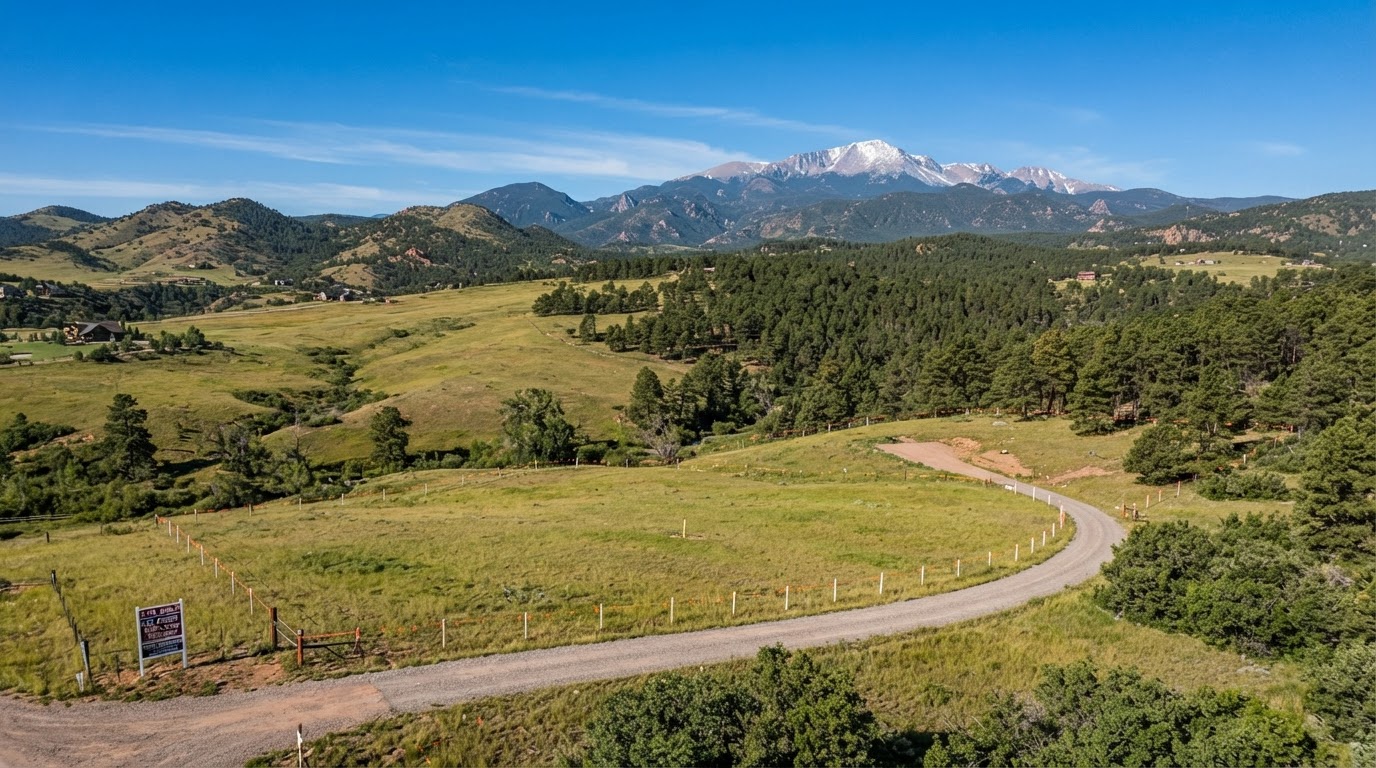
Land shopping feels different from house shopping. There is no kitchen to inspect, no roof to worry about, and no staged furniture to distract you. What you get instead is a raw piece of Southern Colorado, and a set of questions that most first-time land buyers do not think to ask until it is too late. That gap is where a good local agent earns their keep.
The Colorado Springs area has a wide range of land on the market at any given time, from quarter-acre city lots to forty-acre rural tracts in Black Forest and unincorporated El Paso County. The price range is just as wide. What follows is a practical look at what is actually listed, what to verify, and how to think about land as both a home site and an investment.
Why Land Is a Normal Part of This Market
Colorado is a big state, roughly 66 million acres in total, and the Colorado State Land Board is the second largest landowner in it, behind only the federal government. The board holds about 2.8 million acres of working ranches, recreational ranches, commercial buildings, development property in urban locations, water, and minerals. It buys and sells land occasionally for the benefit of its trust, and publishes a disposal map showing where that activity happens.
Most buyers will never deal directly with the state, but that scale explains something useful. Land here is not a novelty asset. It is a functioning part of the market, and there is a steady supply of parcels moving through ordinary channels.
You can see that in the listing volume. El Paso County regularly shows hundreds of land and lot listings. The Black Forest area alone has shown more than a hundred. Northeast Colorado Springs shows a smaller, tighter set of parcels, and even a single city ZIP code such as 80909 can carry more than twenty land listings at once. Inventory shifts week to week, so the exact count matters less than the pattern: there is always something available, and the quality varies enormously.
The Main Categories of Land Around Colorado Springs
What Current Listings Actually Look Like
Prices per acre swing wildly depending on location, access, and whether utilities are nearby. The figures below pull real examples from public listing data to show the spread. Treat these as illustrations of the range, not as benchmarks for any specific parcel.
Look at those numbers long enough and two things become obvious. First, a small lot inside the city can cost more than a thirty-six acre parcel on the outskirts. Second, two parcels of nearly identical size in the same general area can be listed hundreds of thousands of dollars apart. Location explains some of it. Access, zoning, and what can actually be built explain the rest.
Four Questions to Answer Before You Fall in Love With a Parcel
The most useful guidance for first-time land buyers boils down to four checks. Skipping any one of them is how people end up owning a beautiful piece of ground they cannot use.
Run the Demand and Return Numbers
Anyone buying land as an investment rather than a future home site should do two pieces of homework before writing an offer. The first is demand. A thorough analysis of demand for that specific type of land in that specific area tells you whether you can sell or develop later. The second is return on investment. Land that sits for years without a buyer is not a passive asset, it is a holding cost with property taxes attached.
Those two questions are hard to answer from a listing page. They require pulling sales data, understanding what is being built nearby, and knowing which pockets of the region are absorbing land quickly versus slowly. That is the part where a local agent adds real value, because the answer changes from ZIP code to ZIP code and even from road to road.
Details That Never Show Up in Listing Photos
Utilities, water sources, septic feasibility, easements, floodplain status, and any restrictions recorded against the parcel all matter, and none of them are visible in a photograph of open ground. Requirements and processes vary by county and by jurisdiction, so the reliable move is to verify directly with the relevant county planning or building department rather than assuming anything from a listing description.
Ask about the process early. Fees, timelines, and requirements can differ significantly depending on whether the parcel sits inside Colorado Springs city limits, in unincorporated El Paso County, or in a neighboring county such as Teller, Park, Pueblo, or Fremont.
How Land Financing and Timelines Differ
Land purchases do not always follow the same path as a home purchase. Financing options, down payment expectations, and lender requirements vary by parcel and by lender, and many buyers find that a conversation with a lender early in the process changes which properties are realistically in reach. Closing timelines can also stretch longer than a typical house sale when title work is more complex.
The practical takeaway: talk to a lender before you get attached to a specific parcel, then confirm what that lender will and will not finance for the land type you are considering.
Why Working With a Local Agent Matters on Land
Land is a specialty transaction. Lisa Bendel, a Coldwell Banker Realty agent serving Colorado Springs and the surrounding counties of El Paso, Teller, Park, Pueblo, and Fremont, works with buyers who are looking for acreage, rural lots, and buildable parcels in addition to traditional homes.
A local agent can pull comparable sales that are not visible in a public listing feed, flag access and title concerns before they become expensive, and connect you with the surveyors and county offices that can answer the technical questions. If your goal is land in the Colorado Springs area, the right first step is a conversation about what you want to build and how you plan to use the ground, not a list of addresses.
Frequently Asked Questions
How much does land cost in the Colorado Springs area? Prices vary enormously by size and location. Public listing data has shown small in-city lots near $125,000 to $265,000, larger Black Forest acreage from around $495,000 to $995,000, and rural El Paso County parcels from roughly $25,000 for about 1.81 acres up to $218,500 for about 45 acres. Per-acre cost, not total price, is the more useful comparison.
What should I check before buying land? Four things top the list: what type of access the property has, whether it has clear title, what the zoning allows, and what comparable properties have actually sold for. Beyond those, verify utilities, water, septic feasibility, easements, and any recorded restrictions directly with the relevant county office, since none of that is visible in a listing photo.
Is buying land a good investment near Colorado Springs? That depends on demand and return, not on the land itself. A thorough analysis of demand for that specific property type in that specific area, plus a realistic look at return on investment, tells you whether the parcel makes sense. Land that does not sell or develop becomes a long-term holding cost rather than an asset.
Do I need a real estate agent to buy land? You are not required to use one, but land transactions surface issues that house purchases usually do not, including access, title, and zoning questions. An agent familiar with El Paso County and the surrounding counties can pull comparable sales, spot problems early, and point you toward the county offices and professionals who can answer the technical questions.
Where can I find land listings around Colorado Springs? Land is listed across the region, with notable concentrations in Black Forest, Northeast Colorado Springs, and unincorporated El Paso County, along with city lots in ZIP codes such as 80909. Inventory changes constantly, so working with a local agent who tracks new parcels and off-market opportunities is often more productive than refreshing search pages.
Written by Your Local Guide
Lisa Renee Bendel
REALTOR® with Coldwell Banker Realty in Colorado Springs. Dedicated to providing calm, compassionate, relationship-driven guidance throughout Southern Colorado.